There’s a moment most families recognize. You’ve been watching someone you love struggle for longer than you want to admit. You’ve made excuses, you’ve hoped things would turn around on their own, and then one day you can’t pretend anymore. You open your laptop, you start searching, and suddenly you’re overwhelmed by options you don’t understand, decisions you’re not qualified to make, and a fear you can’t quite name.
One of the questions that stops families cold is this: do we keep them close, or do we let them go somewhere unfamiliar?
It’s a fair question. It comes from love. But for families researching sober living in New York City, New Jersey, or anywhere in the Northeast corridor, the data and the research both point in the same direction. Getting out of the city isn’t a compromise. For most professionals, it’s the thing that actually works.
The City That Made Them Successful Is Also the City That Made It Easy to Hide
New York and New Jersey are demanding places to live. The pace, the pressure, the social fabric of dinner meetings and happy hours and networking events where drinking is just what you do, all of it creates an environment where a problem can grow quietly for years before anyone names it.
That same environment doesn’t disappear when someone decides to get sober. The corner bar is still there. The colleagues who’d think nothing of opening a bottle are still there. The after-work routine, the stress triggers, the places where substances have been used dozens or hundreds of times, all of it is still two blocks away.
Research from UCSF’s Ernest Gallo Clinic confirms what many families already sense: environments where alcohol has been repeatedly experienced become powerful relapse triggers for people in recovery. It’s not a character flaw. It’s how the brain works. The places, the people, the cues all carry weight that doesn’t just dissolve because someone made a decision to change.
Distance isn’t cruelty. It’s protection.
The Practical Case: What Families Don’t Always Think to Compare
When families search for sober living in NYC, they’re often looking at costs between $2,000 and $3,000 a month for standard upscale options, with luxury programs reaching $15,000 monthly. That’s for a city environment, surrounded by the same triggers, at rates driven by Manhattan real estate.
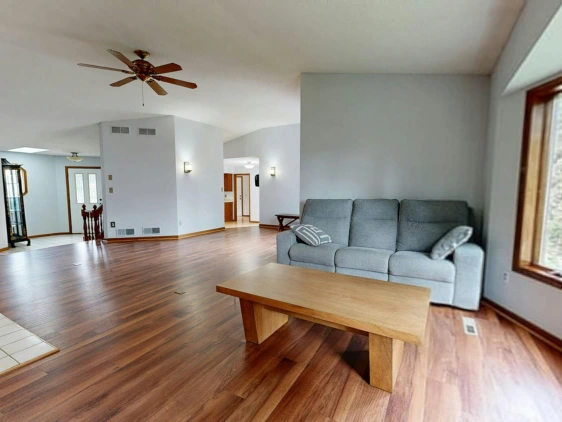
PorchLight Recovery in Lancaster, PA offers structured, state-licensed, NARR-certified sober living in a fully furnished historic-district home, with private and double-occupancy rooms, coaching support, wellness programming, and genuine accountability, starting at $1,500 a month.
The value comparison matters. But what families sometimes underestimate is what the cost of staying in the city really includes. It includes proximity to every familiar trigger. It includes the ease of walking away when things get hard. Research from the National Institute on Drug Abuse shows that for people in residential recovery, staying less than 90 days produces significantly limited results, and being close to home makes leaving early far more tempting.
Lancaster isn’t remote. Amtrak connects Lancaster directly to New York Penn Station. Someone can get to the city when they need to. A work meeting, a family visit, an important appointment, none of that disappears. What disappears is the ability to be impulsively back in a familiar bar at 11pm because it’s two blocks from where they’re sleeping.
That’s not a small thing. That’s the whole thing.
What a Different Environment Actually Gives You
Privacy is one of the most underestimated factors in professional recovery, and it’s one of the reasons families from New York and New Jersey increasingly look outside the city.
For professionals, the fear of being seen is real. Running into a colleague at a meeting. Being recognized. Having word get back to a firm, a team, a client. In a city where everyone is connected to everyone, getting help can feel like a public announcement. That fear stops people from going at all.
Lancaster removes it. No one there knows who your loved one is at work. No one is tracking their reputation. They’re just a person, in a house with other people trying to build something better, in a town that isn’t running at maximum stimulation around the clock.
There’s something else, too, that’s harder to quantify. A city that doesn’t stop gives a person in early recovery no room to hear themselves think. Quiet is underrated. A walkable historic neighborhood, a slower pace, a community with real human texture, these aren’t just nice-to-haves. They’re part of what makes the work of recovery actually possible.
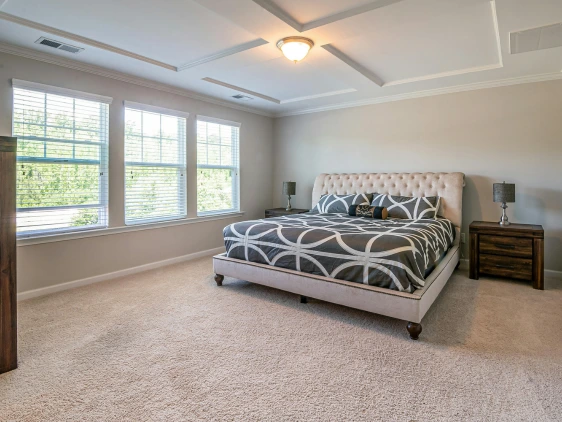
At PorchLight, residents live in fully furnished homes in Lancaster’s historic district. They have access to coaching, peer community, and wellness resources through a level of personal attention that a large facility or a city program can’t replicate. It’s a small, family-run operation, and that shows in how residents are treated. The people running it are in it because they care, not because it’s a job.
For many families, that’s ultimately the thing that matters most. Not the amenities. Not the address. The feeling that someone is genuinely watching out for their loved one.
What to Look for When Choosing a Facility Outside Your Home City
Choosing a sober living home in another state means doing a little more homework upfront. Here’s what to verify before making a decision.
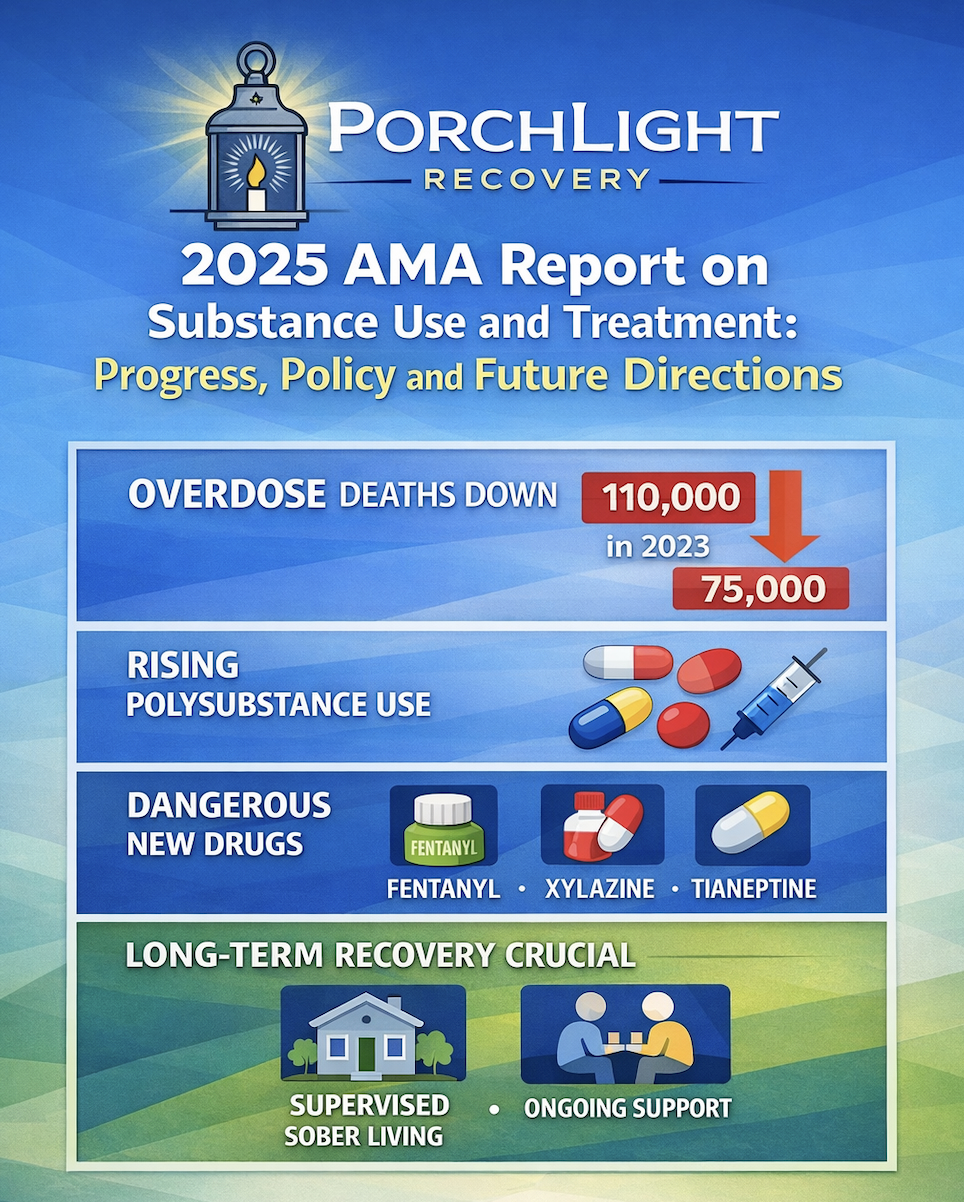
State licensing. In Pennsylvania, sober living homes can be licensed by DDAP, the Department of Drug and Alcohol Programs. This is not optional branding. It’s government oversight with legal enforcement power, mandatory inspections, required background checks for staff, and transparent fee structures. Always ask for a facility’s DDAP license number and verify it at sais.health.pa.gov. For a deeper look at what licensed sober living looks like and why it matters, read our 2025 national report breakdown. PorchLight is DDAP-licensed.
NARR certification. The National Alliance for Recovery Residences sets quality standards for recovery housing across four levels of support. A NARR-certified home has met independently reviewed standards for structure, programming, and resident rights. PorchLight is certified at NARR Level III, the supervised level that includes structured programming and outpatient linkages.
Structured accountability. Ask how residents are held accountable. Drug testing, house rules, daily structure, and coaching are not punitive. They’re what makes sober living work versus a regular apartment.
Remote work compatibility. Many professionals in recovery need to continue working. Ask whether residents have access to high-speed internet, private space for calls, and a schedule that accommodates work obligations. PorchLight homes include a business center with high-speed internet specifically for this reason.
Transparency. Any facility that hesitates to provide its license number, inspection history, or written fee schedule should be a hard no. Legitimate facilities have nothing to hide.
For a practical guide on how to compare recovery residences before making a decision, read our full breakdown here.
You Don’t Have to Figure This Out Alone
Families searching for sober living in New York or New Jersey aren’t looking for a perfect answer. They’re looking for a place that will genuinely care for someone they love, hold them accountable, and give them the best possible chance at something real.
That’s what PorchLight was built for.
If you have questions, about whether it’s the right fit, about what the program looks like, about how the transition works, we’ll talk with you directly. No intake forms, no pressure, no script. Just an honest conversation.
Call us at 833-799-6500 or schedule a free discovery call here.
We’re here.