Licensed Sober Living for Addiction Recovery: What the 2025 National Report Reveals
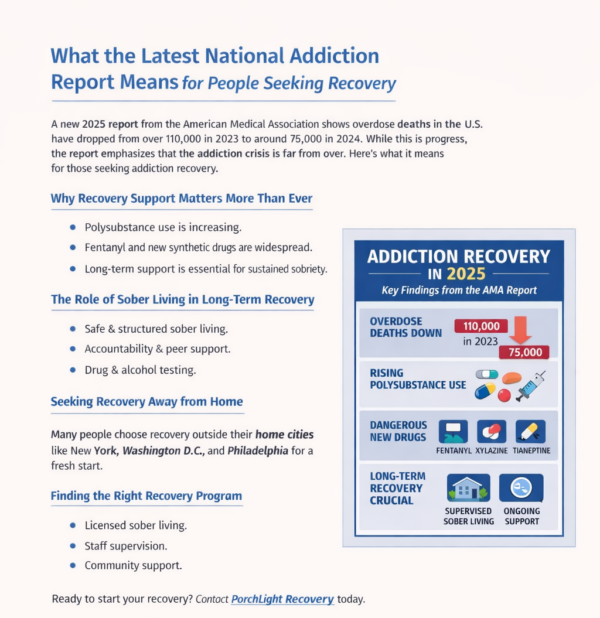
Key findings from the 2025 AMA addiction report and why long-term recovery support matters.
The American Medical Association’s 2025 report on substance use and treatment progress shows that overdose deaths in the United States have begun to decline after years of record increases. This progress reflects expanded access to treatment, naloxone distribution, and increased awareness around addiction.
At the same time, the report emphasizes that long-term recovery support remains essential. Many individuals continue to struggle with relapse after treatment. Because of this, structured environments like licensed sober living for addiction recovery are becoming an increasingly important part of the recovery journey.
For individuals and families searching for recovery support, these findings highlight a simple truth: recovery requires more than detox or short-term treatment.
Why Licensed Sober Living for Addiction Recovery Matters
The national report highlights several ongoing challenges in addiction recovery.
Many people are no longer using a single substance. Instead, polysubstance use is increasing, which means individuals may combine opioids, stimulants, alcohol, or other drugs. Synthetic opioids such as fentanyl continue to dominate the illicit drug supply, and new substances like xylazine are adding additional risk.
Because of these changes, recovery often requires consistent support, accountability, and a stable living environment.
This is why licensed sober living for addiction recovery has become an important part of the continuum of care. Structured sober living environments provide:
-
Safe housing free from drugs and alcohol
-
Accountability through peer support
-
Drug and alcohol screening
-
Recovery meeting participation
-
Daily structure and stability
These elements help individuals maintain the progress they made during treatment.
How Licensed Sober Living Supports Long-Term Recovery
Research consistently shows that recovery improves when individuals remain connected to supportive communities.
Licensed sober living homes offer an environment designed specifically for recovery. Residents live alongside peers who share the goal of long-term sobriety. Staff oversight and house guidelines help create consistency and accountability during a critical stage of recovery.
For many people, the transition from treatment back to independent living can be overwhelming. Returning to the same environment that supported substance use often increases the risk of relapse.
Licensed sober living for addiction recovery helps bridge this gap. It allows individuals to rebuild routines, relationships, and healthy habits in a structured setting.
Why People Travel for Addiction Recovery
Another trend highlighted by recovery professionals is the growing number of individuals seeking recovery outside their home communities.
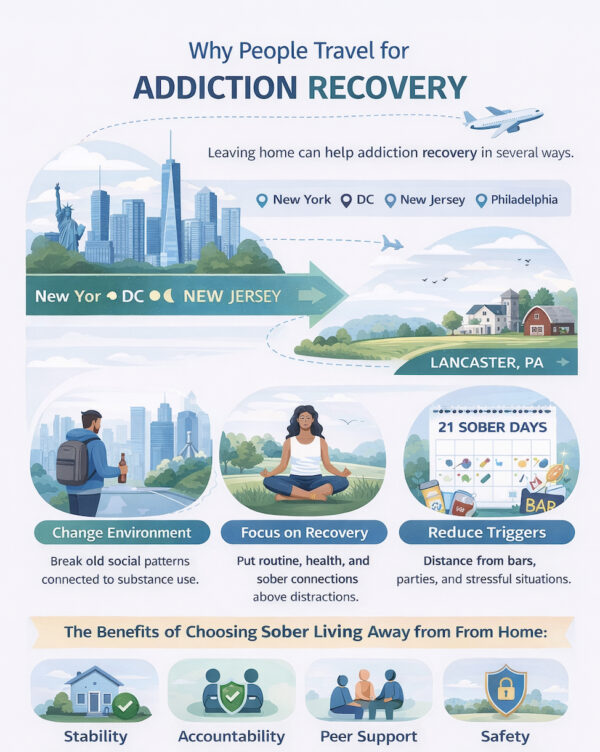
People often choose to pursue recovery away from cities where their addiction developed. This allows them to step away from familiar triggers and social pressures.
Many individuals searching for licensed sober living for addiction recovery travel from large metropolitan areas such as:
-
New York City
-
Washington, DC
-
Philadelphia
-
Northern New Jersey
Smaller communities can offer a quieter environment where individuals can focus on rebuilding their lives.
Lancaster, Pennsylvania has become one such destination for recovery because of its strong recovery community and supportive environment.
The Future of Addiction Recovery Support
The latest addiction data offers real reasons for hope. Overdose deaths are declining, and access to life-saving interventions continues to expand.
However, experts agree that recovery requires more than emergency response. Long-term solutions must include treatment, community support, and stable housing.
Licensed sober living for addiction recovery plays a key role in this process by providing a safe environment where individuals can continue building the foundation for lasting sobriety.
Recovery does not happen overnight. It develops through connection, accountability, and the support of others walking the same path.
Finding Licensed Sober Living for Addiction Recovery
If you or someone you love is searching for recovery housing, it is important to choose an environment that prioritizes safety, structure, and community.
A quality sober living residence should provide:
-
Clear recovery expectations
-
Staff oversight and accountability
-
Drug and alcohol screening
-
Peer support and recovery meetings
-
A stable and supportive environment
Recovery is possible. With the right support system in place, individuals can build lives defined not by addiction but by purpose and connection.