
BEYOND RECOVERY | PART 1 OF 5
You’ve spent decades building a career. What happens when addiction threatens everything you’ve worked for? Losing a professional identity can be devastating, but it doesn’t have to mean losing your future.
For a physician, attorney, pilot, first responder, executive, or other established professional, addiction can put much more than employment at risk. A license may be restricted. A hard-earned reputation may feel uncertain. Financial stability, family relationships, and the identity built around a profession can all be shaken.
Yet the end of one professional chapter does not have to mean the end of a meaningful career. Recovery can create the stability to consider what comes next—and experience gained over decades does not simply disappear.
A Career Is Often Part of Who You Are
Recovery doesn’t erase decades of professional experience. It creates an opportunity to build on them.
For many professionals, a career represents more than a paycheck. It reflects years of education, sacrifice, responsibility, and achievement. It becomes part of how we introduce ourselves—and sometimes how we define our worth.

When addiction disrupts that career, the consequences can extend far beyond lost employment. A physician may face restrictions on practicing medicine. An attorney may confront professional disciplinary proceedings. A pilot or first responder may find that returning to a previous role requires a lengthy process—or is no longer possible.
These challenges are real. But so is the experience accumulated along the way.
Leadership, critical thinking, communication, problem-solving, and the ability to perform under pressure do not simply disappear because someone’s professional circumstances change.
Recovery offers an opportunity to separate who we are from what happened to us—and begin considering what comes next. PorchLight’s professional recovery housing model recognizes that privacy, dignity, stability, and professional responsibilities can be important considerations in rebuilding a life.
Why Recovery Needs More Than Treatment
Lasting recovery involves more than abstinence. SAMHSA identifies health, home, purpose, and community as four interconnected dimensions of recovery.
Recovery is not simply the absence of alcohol or drugs. It is the ongoing process of rebuilding health, stability, relationships, and meaningful participation in everyday life.
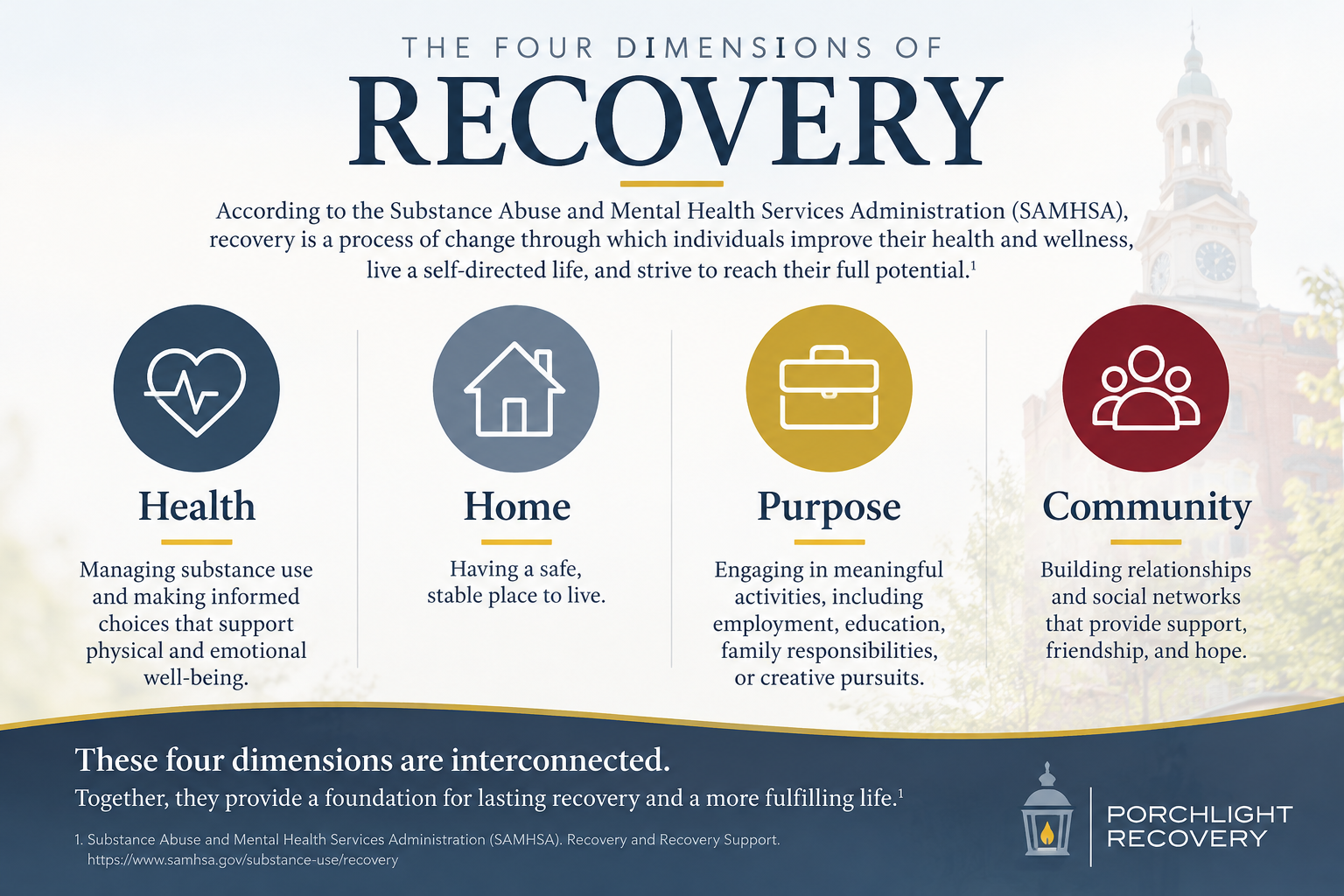
The Substance Abuse and Mental Health Services Administration (SAMHSA) identifies four major dimensions that support recovery:
- Health: Managing substance use and making informed choices that support physical and emotional well-being.
- Home: Having a safe, stable place to live.
- Purpose: Engaging in meaningful activities, including employment, education, family responsibilities, or creative pursuits.
- Community: Building relationships and social networks that provide support, friendship, and hope.
For someone rebuilding a professional life, these dimensions are interconnected.
A stable living environment creates room to concentrate on recovery. Supportive relationships help restore confidence. Education, meaningful work, and career planning can provide direction beyond treatment.
Research into recovery housing has also identified encouraging associations with substance-use and employment outcomes, although results vary by housing model, population, and study design.
The lesson is not that recovery housing guarantees professional success. It is that lasting recovery often requires an environment in which people can rebuild the practical foundations of their lives. For a closer look at the importance of continued support, read our guide to why sober living can be a missing piece in recovery planning.
Starting Over Doesn’t Mean Starting From Nothing

Starting over doesn’t mean starting from nothing. The experience, knowledge, and skills developed over a lifetime can become the foundation for a meaningful new chapter.
Imagine spending twenty years developing expertise in a profession, only to discover that returning to the same position is uncertain.
The natural question may be: What am I supposed to do now?
A more productive question is: What can I build with the knowledge, skills, and experience I already have?
A former healthcare professional may have valuable experience in operations, training, administration, or patient advocacy. An attorney may possess transferable strengths in research, negotiation, compliance, and communication. A first responder may bring exceptional skills in leadership, crisis management, and teamwork.
These capabilities can become the foundation for a different professional chapter.
This thinking is helping shape PorchLight Pathways, an emerging initiative intended to connect long-term recovery with education, vocational development, employment readiness, and renewed independence.
The Pathways vision includes three complementary areas:
Vocational Prep
Exploring practical skills, job readiness, training opportunities, and pathways into meaningful employment.
Workforce & Managerial Prep
Helping participants identify transferable experience, develop professional skills, and explore career rebuilding, management, and entrepreneurial opportunities.
Collegiate Prep
Supporting the exploration of continuing education, credentials, academic pathways, and new fields of study.
These tracks are being developed as flexible opportunities rather than a mandatory sequence. The objective is to help individuals identify a direction that fits their abilities, interests, and circumstances.
Recovery Creates Possibility. Action Creates Change.
A central idea behind PorchLight’s philosophy is that meaningful change requires personal action.
Our 100 Action Principles draw inspiration from recovery wisdom, personal responsibility, resilience, and the entrepreneurial mindset. They are not intended as a checklist or a rigid curriculum. They are reminders of the attitudes and decisions that can help people move forward.
One principle is especially relevant to professionals rebuilding their lives:
Starting over doesn’t mean starting from nothing.
The experience gained through years of work, education, relationships, and adversity still has value. Recovery creates an opportunity to put that experience to use in new ways.
At PorchLight, our role is not to make those decisions for someone. It is to help create a supportive environment, meaningful connections, and opportunities in which individuals can take action for themselves.
The work belongs to the individual. The possibility grows through the environment, resources, and relationships available to support that work.
A New Environment. A New Chapter.
Where recovery takes place can influence the experience of rebuilding a life.
PorchLight Recovery is developing its recovery campus in Historic Downtown Lancaster, Pennsylvania, a walkable city known for its historic architecture, local businesses, cultural attractions, and strong sense of community.
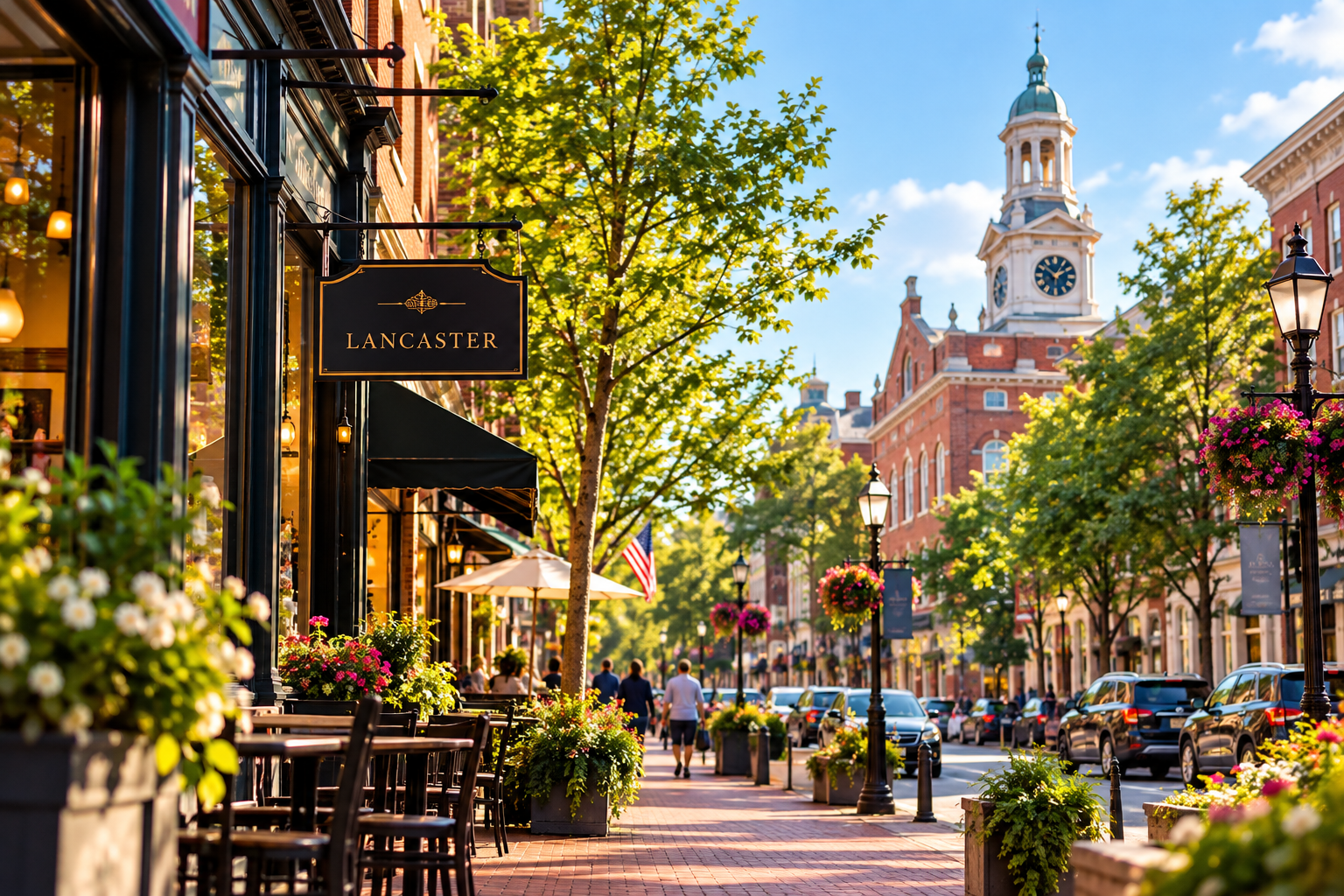
A new environment can create new possibilities. Historic Lancaster, Pennsylvania, offers a welcoming setting for rebuilding connections, discovering purpose, and beginning a new chapter in recovery.
Lancaster offers more than an attractive setting. Its neighborhoods, cafés, markets, educational resources, and everyday opportunities for connection provide a welcoming backdrop for establishing new routines and rediscovering independence.
For professionals whose lives have become defined by a difficult chapter, a different environment may also create room for a different perspective.
PorchLight’s broader vision brings together structured recovery housing, connections to clinical care, community engagement, and the developing Pathways initiative.
The goal is not simply to help people return to where they were before addiction. It is to help create opportunities for a meaningful future—whether that means returning to a profession, pursuing a different career, continuing an education, or discovering an entirely new direction. Discover PorchLight’s recovery campus in Historic Downtown Lancaster and the community surrounding our restored recovery residences.
Recovery Is the Beginning. Opportunity Is the Destination.
Losing a career can feel like losing a lifetime of achievement. But professional experience, personal strengths, and the capacity to contribute do not disappear with a job title.
Recovery can provide the foundation for rebuilding.
That belief is helping guide the development of PorchLight Pathways. Our vision is to connect the stability of recovery with opportunities to explore education, transferable skills, meaningful employment, and new professional directions. Whether someone hopes to return to a previous career or pursue an entirely different one, the next chapter can begin with the strengths they already possess.
For case managers, families, and referral professionals: If you are helping someone navigate recovery alongside career disruption, connect with PorchLight Recovery to discuss our recovery housing and learn more about the developing Pathways vision.
Helping a loved one make a recovery decision? Download our free Recovery Residence Decision Toolkit to better understand housing options and the questions worth asking.
This is Part I of PorchLight Recovery’s five-part Beyond Recovery series. Read Part II: Beyond the Job Title: Rediscovering Purpose After Addiction to explore how professionals re-invent themselves by identifying value and experience and transitioning that into a new career.









Leave A Comment