How to Communicate During Rehab: Supporting a Loved One While Letting Them Heal
When someone you love enters rehab, everything shifts.
The house may feel quieter. The tension may soften—or in some ways, deepen. And somewhere in the middle of all of that is a question many families carry:
“How do I stay connected… without interfering with their healing?”
It’s a tender balance. One that asks you to stay present while also stepping back.
And if that feels uncomfortable, you’re not doing it wrong.
You’re doing something new.
Recovering Better Together: A Family Guide to Addiction, Healing & Connection
Understanding the Purpose of Communication During Rehab
Rehab is not just about stopping substance use—it’s about rebuilding the internal world of the person in treatment.
That means:
- Learning emotional regulation
- Understanding patterns and triggers
- Developing personal accountability
- Rebuilding identity
Communication during this time isn’t about maintaining the old relationship.
It’s about creating space for a healthier one to emerge
Why Communication Feels Different Right Now
If communication feels limited, structured, or even distant—it’s not a sign of disconnection.
It’s intentional.
Most treatment programs create communication guidelines to:
- Reduce emotional overwhelm
- Prevent reactive cycles
- Allow space for individual growth
This can feel hard, especially if you’re used to frequent contact or stepping in to help.
But here’s a gentle reframe:
Distance during rehab is not rejection—it’s part of the repair process.
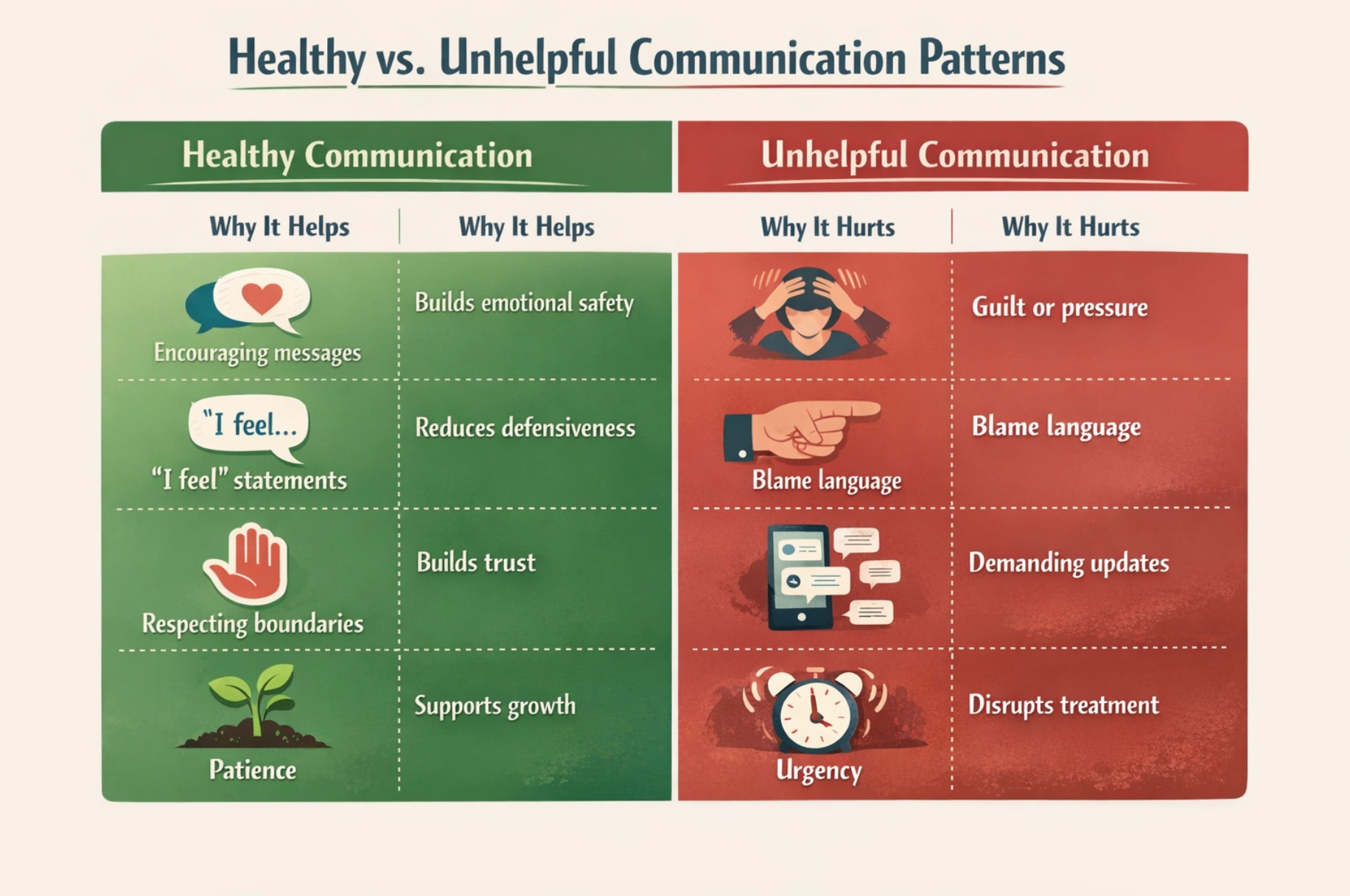
Healthy vs. Unhelpful Communication Patterns
| Healthy Communication | Why It Helps | Unhelpful Communication | Why It Hurts |
|---|---|---|---|
| Encouraging messages | Builds emotional safety | Guilt or pressure | Creates shame |
| "I feel" statements | Reduces defensiveness | Blame language | Triggers shutdown |
| Respecting boundaries | Builds trust | Demanding updates | Disrupts treatment |
| Patience | Supports growth | Urgency | Reinforces anxiety |
The Power of Letters and Intentional Communication
One of the most supportive ways to communicate during rehab is through letters or structured messages.
Why?
Because they:
- Slow down emotional reactions
- Allow thoughtful expression
- Reduce the chance of conflict
A Simple Framework for Writing
You don’t need to overthink this. Keep it grounded and real:
- Start with care
“I’ve been thinking about you and hoping you’re finding moments of peace.”
- Share honestly (without blame)
“This has been hard, and I’m learning a lot about myself too.”
- Offer encouragement
“I’m proud of you for doing this work.”
- Close with steadiness
“I’m here, and I’m walking this alongside you.”
That’s enough. Truly.
What to Be Mindful Of
Even with the best intentions, certain patterns can create pressure or disrupt healing.
Emotional Overloading
Sharing every fear, frustration, or crisis can overwhelm someone in early recovery.
Instead:
- Share selectively
- Process deeper emotions with your own support system
Seeking Reassurance from Them
“Are you okay? Are you really going to change?”
These questions often come from fear—but they place emotional responsibility back on the person in treatment.
Instead:
- Focus on your own grounding
- Allow their process to unfold
Trying to Fix or Direct Their Recovery
“You should talk to your therapist about…”
Even helpful suggestions can feel like control.
Recovery is something they have to own.
Navigating Boundaries (Without Feeling Like You’re Withdrawing Love)
Boundaries can feel confusing—especially if you’re used to equating love with constant availability.But in recovery, boundaries are love.They sound like:
- “I care about you, and I’m also taking care of myself.”
- “I’m here for you, and I trust your process.”
Boundaries don’t push people away.
They create the safety needed for real connection.
What Your Loved One May Be Experiencing
While you’re adjusting on the outside, they’re doing deep internal work.
They may be:
- Feeling vulnerable or exposed
- Processing shame or regret
- Learning to sit with emotions without numbing
Your steady, non-reactive communication becomes a quiet anchor for them.
Not loud. Not overwhelming. Just consistent.
Research Insight: Why Family Communication Matters
- Family involvement in treatment can increase long-term recovery success by up to 30%
- Supportive communication reduces relapse risk and improves emotional stability
- Boundaried, consistent communication builds trust post-treatment
This isn’t about saying the perfect thing.
It’s about creating an environment where healing can continue after rehab ends.
Taking Care of Yourself in the Process
Here’s something that doesn’t get said enough:
You are going through something too.
And your healing matters.
Gentle Self-Support Practices:
- Talk to someone you trust (friend, therapist, support group)
- Create small daily rituals (walks, quiet time, journaling)
- Notice when you’re carrying more than is yours
You don’t have to carry this alone.
Supporting the Transition After Rehab
Communication during rehab is just the beginning.
What you’re building now becomes the foundation for what comes next—whether that’s returning home or transitioning into a structured sober living environment.
At PorchLight Recovery, we support individuals and families through that next phase—where accountability, structure, and community continue the work that began in treatment.
Closing Reflection
You don’t have to say everything.
You don’t have to fix everything.
You just have to stay steady.
Communication during this time is less about finding the perfect words—and more about becoming a safe place.
And sometimes, the most powerful message you can send is this:
“I believe in your ability to heal—and I’m here, without needing to control the outcome.”
About the Author
Bridget Riley is a certified Integrative Health & Wellness Coach and CDC Certified Divorce Coach who helps women and couples navigate divorce, life transitions, sex, intimacy, and communication challenges. Drawing from more than two decades of entrepreneurial and wellness experience, Bridget combines professional expertise with personal insight to provide compassionate, practical coaching that helps clients build confidence, heal, and move forward.

Bridget Riley